
Reparation for Survivors of Conflict Related Sexual Violence: Is it possible? How? Experiences working in Ukraine, Colombia, and Syria
How to define reparation for victims of violations committed massively in armed conflict or by repressive states? How to provide reparation for survivors of conflict related sexual violence? What obstacles survivors often find and how they can be addressed and eventually overcome? What are the main challenges reparation for survivors of sexual violence in Ukraine, Colombia, and Syria face, and which strategies are being implemented? How reparation can be implemented in ways that contribute to a broader acknowledgement, accountability and conflict prevention effort? Are we creating false expectations when affirming the right to reparation? And how can we guarantee the access of tens of thousands of victims who have good reasons to be distrustful, fearful, often traumatised, or who have little evidence of a crime difficult to prove, particularly for women, for those with little knowledge about their rights and how to exercise them?
These questions take concrete shape working with women and men survivors, members of partner organisations, and sometimes committed government officials. Working for several decades in multiple countries, is a constant lesson of humility, listening, and finding join, workable solutions.
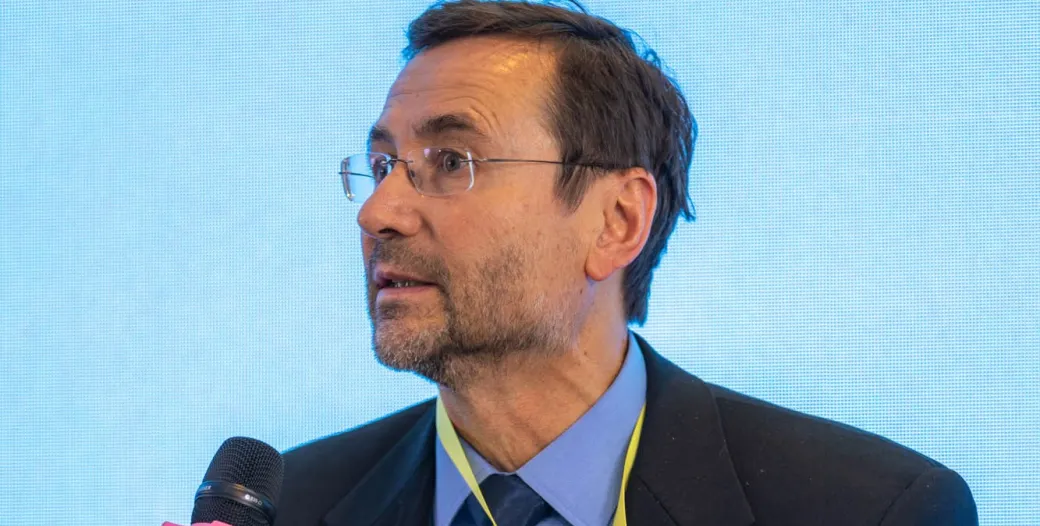
Cristián Correa is the Head of the Reparations Praxis Hub at the Global Survivors Fund, where he helps systematise and encourage learning from practical experiences of reparation for survivors of conflict related sexual violence. He also leads GSF work in Colombia, Ukraine, and Syria. Previously he was a senior expert at the International Center for Transitional Justice, working on reparations and transition justice in countries like Peru, Colombia, Côte d’Ivoire, Kenya, Sri Lanka, Ethiopia and several others. In his native Chile, he was part of a commission to advice President Bachelet on human rights and on finding the disappeared. Before that, he was the legal secretary of the National Commission on Political Imprisonment and Torture (the Valech Commission), which registered more than 28,000 victims of political imprisonment and torture during the military regime, leading to the implementation of a reparation policy. He has a Master on International Peace Studies, from the University of Notre Dame, USA (1992), and a Law Degree from Pontificia Universidad Católica de Chile (1993). His publications include Correa, C., Furuya, S., y Sandoval, C. Reparations for Victims of Armed Conflict (Max Planck Trialogues on the Law of Peace and War – Vol III. Cambridge: Cambridge University Press, 2020).